
ABACUS OLYMPIAD CLASS 7 (LEVEL 7)
Abacus Olympiad Class 7
ABACUS OLYMPIAD CLASS 7
The Class 1 National Logical Reasoning Olympiad (NLRO) aims to assess and strengthen the logical thinking and problem-solving skills of young learners. Its syllabus is carefully aligned with the learning abilities of Class 1 students, covering topics such as patterns, shapes, numbers, spatial understanding, and everyday reasoning. The Olympiad provides students with opportunities to practice and apply their observation, reasoning, and analytical skills while introducing them to simple Olympiad-style questions. This helps build confidence in tackling different types of problems.
Designed by subject experts, the Class 1 NLRO workbook contains chapter-wise multiple-choice questions along with answers and easy-to-understand explanations. The structured and engaging format makes it ideal for Class 1 students, helping them develop a strong foundation in logical reasoning while enjoying the learning process.
PREPARATION MATERIAL FOR ABACUS OLYMPIAD
Proper study materials play a key role in preparing for the Class 1 National Logical Reasoning Olympiad (NLRO). Engaging in a variety of simple reasoning exercises helps young learners strengthen their observation, problem-solving, and analytical skills. Workbooks specifically designed for Class 1 students cover important logical reasoning concepts in a structured and enjoyable way. The topics are organized step-by-step, allowing children to practice effectively, build their thinking skills, and gain confidence while getting ready for the Olympiad.
ABACUS OLYMPIAD WORKBOOK CLASS 7
The Class 1 National Logical Reasoning Olympiad (NLRO) is designed to help young learners develop strong reasoning and problem-solving skills while fostering curiosity and confidence. The specially designed NLRO workbooks cover essential topics such as patterns, shapes, numbers, spatial understanding, and everyday problem-solving in a simple, step-by-step manner.
The content is engaging and structured to make learning enjoyable, allowing students to gradually grasp concepts and improve their logical thinking abilities. These workbooks also help parents and teachers track progress and understand the types of questions asked in the Olympiad.
Participating in the NLRO not only strengthens observation and reasoning skills but also enhances students’ confidence in thinking critically and solving problems. With these resources, Class 1 students can approach the exam with readiness and enthusiasm, making logical reasoning both fun and rewarding.
ABACUS WORKBOOK:
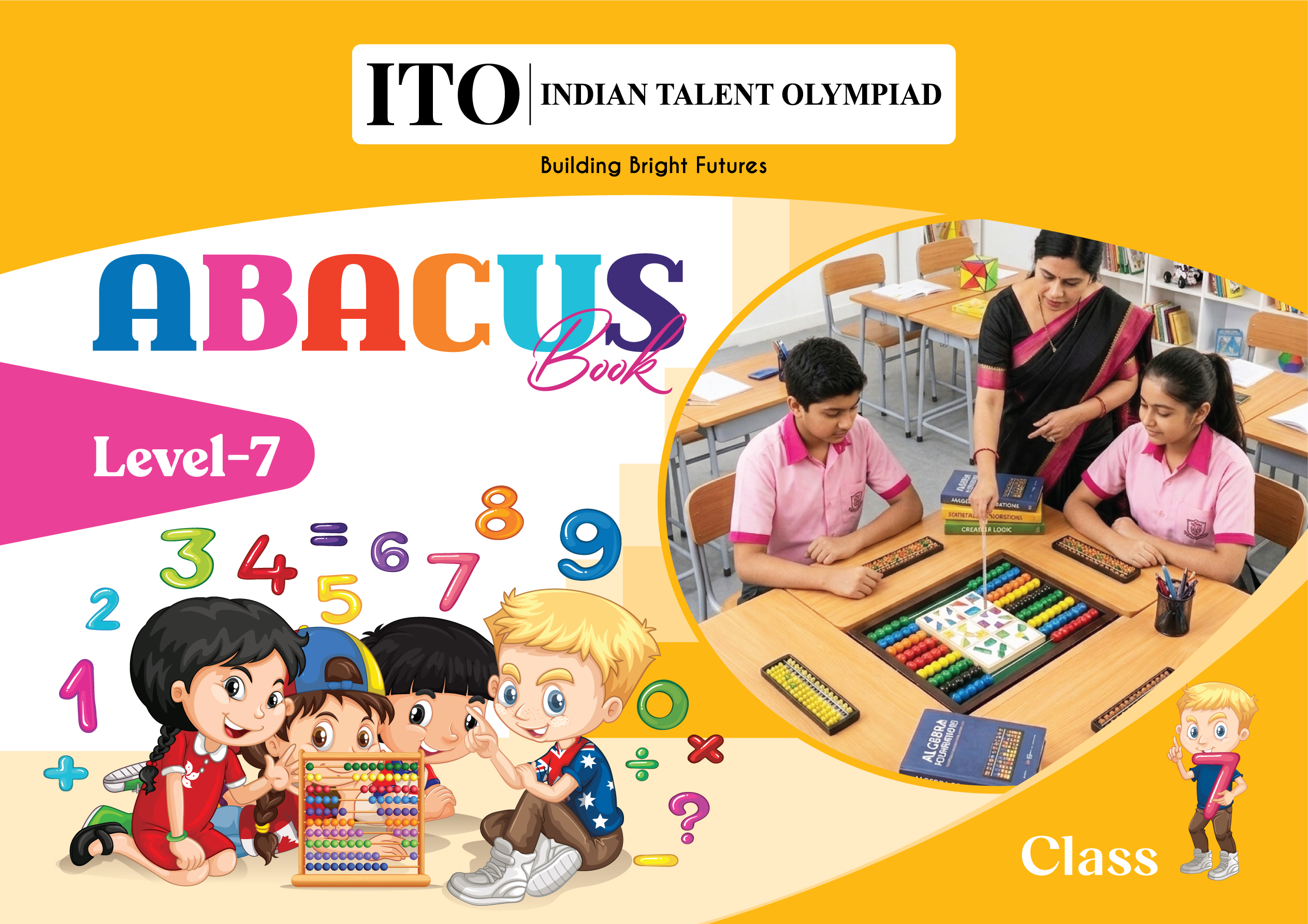
ABACUS OLYMPIAD SYLLABUS FOR CLASS 7
By the time children reach Class 1, they are ready to develop basic logical reasoning and problem-solving skills. The Class 1 NLRO syllabus introduces students to simple and engaging concepts that help them observe, analyse and think critically.
The syllabus covers topics such as patterns, measuring units, geometrical shapes, identifying the odd one out, spatial understanding, grouping, analogies, ranking, symmetry, paper folding and cutting, situation-based reasoning, mirror images and water images.
Through fun and structured exercises, students learn to recognize patterns, compare objects, understand spatial relationships, and solve reasoning problems. The Class 1 NLRO workbook includes carefully designed activities aligned with this syllabus, helping students gain confidence and a strong foundation in logical thinking. Parents can refer to the detailed syllabus to guide and support their child’s preparation effectively.
· Identify the Value (Large Numbers)
· Addition and subtraction:
2, 3, 4-digit numbers with 15+ rows, including decimal points.
5-digit numbers (7-8 rows).
· Multiplication: 4-digit by 2-digit (4 × 1), 2-digit by 2-digit (4 × 2) and 3-digit by 2-digit (3 × 2)
· Division: 3/4-Digit by 1-Digit, 3/4-Digit by 2-Digit, 5-Digit by 1-Digit
· Decimal: Addition, subtraction, and multiplication of decimal
numbers.
· Concepts: Introduction to BODMAS and Fraction Conversions.
Online Olympiad Registration | Olympiad Exam Registration 2026 | Apply for Olympiad Exam | Student Annual School Olympiad Registration | Olympiad Mock Test & Olympiad Trial Test | Online Olympiad | Olympiad Student Test | Online Olympiad Monthly Series | School Olympiad Brochure | Monthly Online Olympiad Brochure | Olympiad Exam Schedule | Monthly Online Olympiad Schedule | Olympiad 2026 Key Dates Schedule Exam Pattern and Benefit | School Olympiad Notice Board | Olympiad Exam Guidelines | How To Prepare For Olympiad Exam | Olympiad Meaning | Use of Olympiad Exams | Olympiad Results | Olympiad Sample Papers | Olympiad Exam Participation | Olympiad Downloads | Olympiad Exam Pattern | Monthly Olympiad Guidelines | Online Olympiad Exam Schedule | Last Date of Olympiad Registration | Monthly Olympiad Syllabus | How to become successful in Olympiad | Preparation Guide for Olympiad |